
Revelation 6:1-2 (Reconsidered)
The White Horse of War View
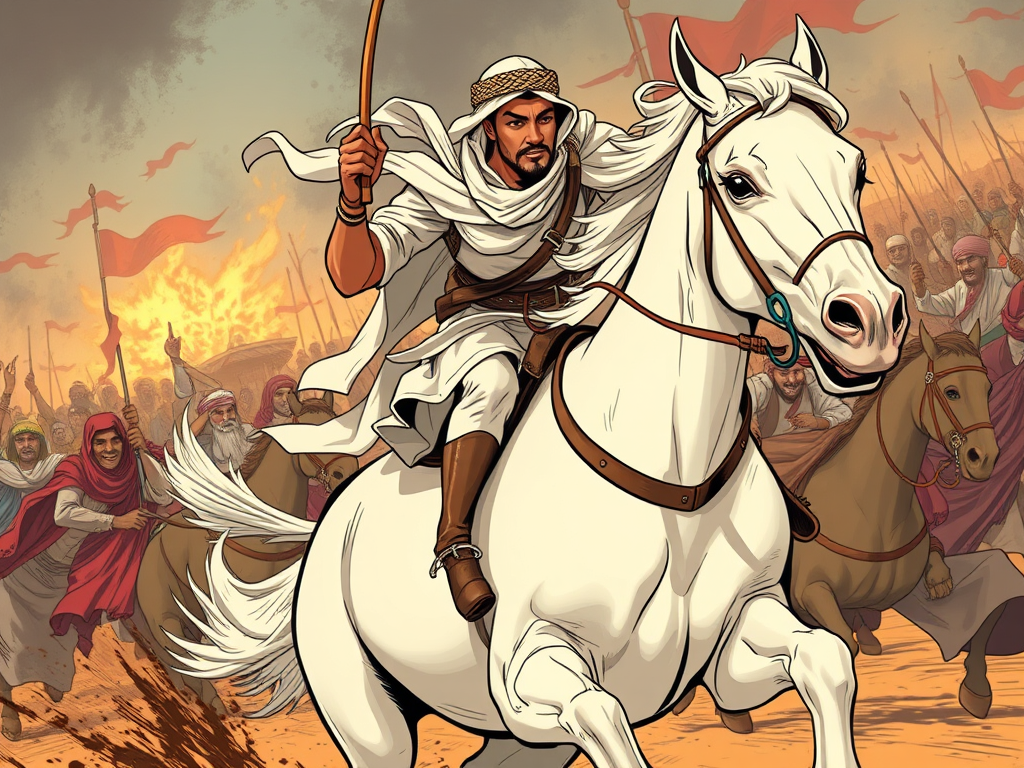
As soon as I saw the Lamb* open the first of the 7 seals*, I heard, as it were, the sound* of roaring thunder*. One of the four living creatures* said, “Come and see!” So, I looked and saw a white horse and a rider* sitting on it holding a bow*. A crown* was given to him so he went forth conquering* and to conquer.

Dig Deeper- Click on the words below!
Lamb
John 1:29 (KJV)
The next day, John sees Jesus coming to him, and says, “Behold the Lamb of God, who takes away the sin of the world.”
The Lamb is a metaphor for Jesus, the Messiah. A metaphor is a thing representing something else or symbolic of something else.
Seals
Sphragis-a signet; by implication the stamp impressed (as a mark of privacy, or genuineness) on a book or document or scroll :- a seal. Strong’s Talking Greek & Hebrew Dictionary.
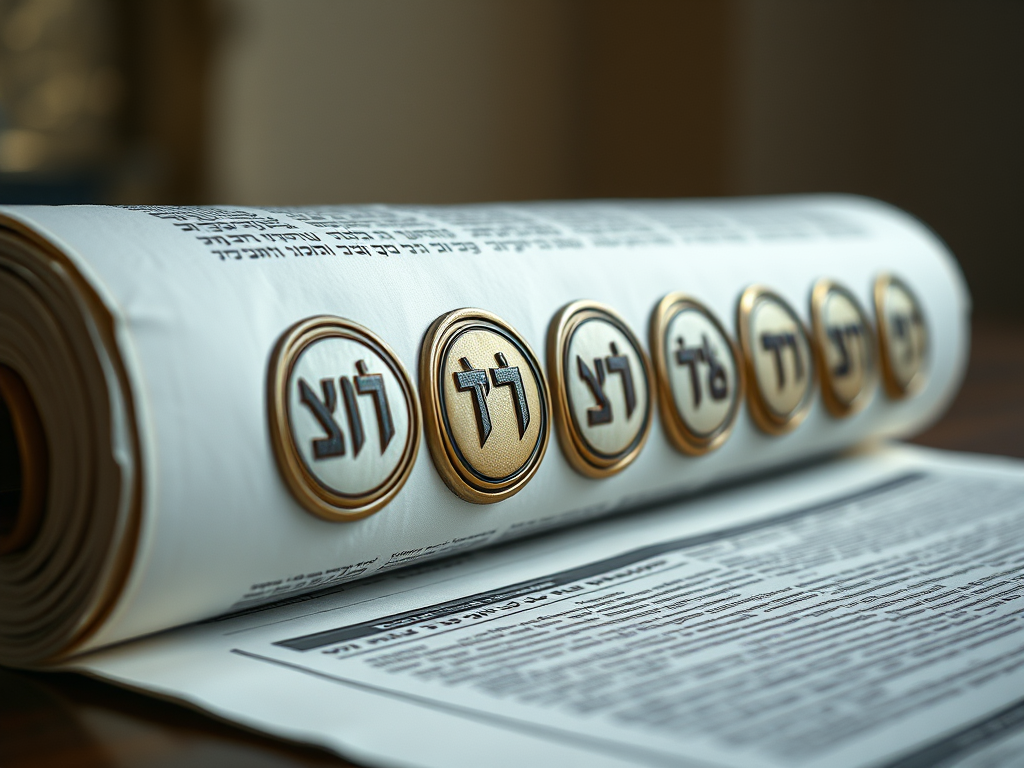
In the first century, when Revelation was written, a person of authority would seal important documents to keep them secret or to authenticate them. Roman law required a last will and testament to be sealed 7 times, as the wills of Caesar Augustus and Emperor Vespasian were. This scroll with 7 seals, appears to be the last will and testament of Jesus, the Messiah.
Sound
phone: probably akin to <G5316> (phaino) through the idea of disclosure; a tone (articulate, bestial or artificial); by implication an address (for any purpose), saying or language :- noise, sound, voices. Strong’s Talking Greek & Hebrew Dictionary.
Thunder
bronte; akin to bremo (to roar); :- thunder (-ing). Strong’s Talking Greek & Hebrew Dictionary.
Thunder in the Bible is often seen as the voice or judgement of God.
Rider
This word is not in the text. There isn’t a noun or pronoun, male or female, in the text to describe the rider. If the noun man/rider isn’t added, then the verse implies the horse is given the crown to wear and is holding the bow when it goes forth subdue and conquer.
Bow
Toxon (in Greek)-from the base of <G5088> (tikto); a bow :- bow. Strong’s Talking Greek & Hebrew Dictionary.
The word bow (Qeshet in Hebrew and Toxon in Greek) is used in the Bible for an instrument used to hunt or to fight wars plus it’s used for a rainbow. The base meaning of bow is “bending“, so it applies to bending light or bending wood depending on the context.
Crown
from an apparently primary stepho (to twine or wreathe); a chaplet (as a badge of royalty, a prize in the public games or a symbol of honor general); :- crown.
Strong’s Talking Greek & Hebrew Dictionary.
A Greek stephanos (laurel wreath) crown symbol is currently used in the Olympic games.
Conquering
Nikao: from <G3529> (nike); to subdue (literal or figurative) :- conquer, overcome, prevail, get the victory. Strong’s Talking Greek & Hebrew Dictionary.
A View Through the Bow of Ishmael (or Elam)
As soon as I saw the Lamb* open the first of the 7 seals*, I heard voices* shouting.* One of the four beasts* said, “Come and see!” So, I looked and saw a white horse and sitting upon it, a rider* holding a bow.* A woven crown* of twine was given to him and he went forth to subdue* in order to conquer*.
Dig Deeper- Click on the words below!
Lamb
John 1:29 (KJV)
The next day, John sees Jesus coming to him, and says, “Behold the Lamb of God, who takes away the sin of the world.”
The Lamb is a metaphor for Jesus, the Messiah. A metaphor is a thing representing something else or symbolic of something else.
Seals
Sphragis-a signet; by implication the stamp impressed (as a mark of privacy, or genuineness) on a book or document or scroll :- a seal. Strong’s Talking Greek & Hebrew Dictionary.
In the first century, when Revelation was written, a person of authority would seal important documents to keep them secret or to authenticate them. Roman law required a Last Will and Testament to be sealed 7 times, as the wills of Caesar Augustus and Emperor Vespasian were. This scroll with 7 seals, appears to be a metaphor for the last will and testament of Jesus, the Messiah.
Voices
phone: probably akin to <G5316> (phaino) through the idea of disclosure; a tone (articulate, bestial or artificial); by implication an address (for any purpose), saying or language :- noise, sound, voice. Strong’s Talking Greek & Hebrew Dictionary.
Shouting
bronte; akin to bremo (to roar); :- thunder (-ing). Strong’s Talking Greek & Hebrew Dictionary.
Thundering/Roaring is a sound that can be made by shouting, laughter or loud debate. It can also be the sound of a large, moving crowd of people or of stampeding animals. And thundering/roaring is also the sound of storms, ocean waves and lions.
Most likely, the loud roaring sound a lion makes is used to juxtapose the meek quietness of the Lamb, in this metaphor..
Rider
This word is not in the text. There isn’t a noun or pronoun, male or female, in the text to describe the rider. If the noun man/rider isn’t added, then the verse implies the horse is given the crown to wear and is holding the bow when it goes forth subdue and conquer. Perhaps the noun describing the rider is missing because the rider is different at different times in history.
Bow
The word bow (Qeshet H7185 in Hebrew and Toxon G5088 in Greek) is used in the Bible for an instrument to hunt with or to fight wars with and it’s used for a rainbow. The base meaning of bow is “bending“, so it applies to bending light or bending wood depending on the context.
Genesis 21:20-21 (reconsidered)
God was with Ishmael and he grew strong. He dwelt in the desert wilderness of Paran (Arabia). Ismael grew up to became a skilled bowman (archer). His mother found a wife for him from the land of Egypt.
Genesis 9:13 (reconsidered) “I put my bow (qeshet H7185) in the thunder-clouds, and it shall be for a token (flag, evidence) of a covenant (contract, agreement) between me and the earth (land).
Genesis 27:3 (reconsidered)
Arise! Prepare your quiver and bow (qeshet H7158), and go out to the field and hunt for venison meat.
Jeremiah 49:34-39 (KJV)
The word of the LORD came to Jeremiah the prophet, against Elam, in the beginning of the reign of Zedekiah king of Judah, saying, “This says the LORD of hosts; ‘Behold, I will break the bow of Elam, the chief of their might.”‘
“Upon Elam will come four cruel spirits from heaven, to scatter Elam to the wind. Outcasts hidden in foreign nations, Elam concealed and besieged. Elam broken in pieces before the adversaries, those that beseech their soul.” ” Evil will come upon them, fierce anger.” saith the LORD. “Send out the swords after them, until they have have been consumed.” “Then, I will set a throne (covering) in Elam. I will destroy the Messenger and the chief ruler.” saith the LORD. And in the last days, they will return from exile to the former state of prosperity of Elam.” saith the LORD.
Crown
Stephanos-from an apparently primary stepho (to twine or wreathe); a chaplet (as a badge of royalty, a prize in the public games or a symbol of honor general); :- crown.
Strong’s Talking Greek & Hebrew Dictionary.
From Wikipedia, the free encyclopedia
An agal (Arabic: عِقَال; also spelled iqal, egal, or igal) is a clothing accessory traditionally worn by Arab men. It is a doubled black cord used to keep a keffiyeh in place on the wearer’s head.[1] Agals are traditionally made of goat or camel hair.[2] Modern agals typically use cord manufactured for this purpose (rulers of Bahrain in particular are known for wearing elaborate agal designs), but plain rope is still occasionally utilized.[3]
It is traditionally worn by Arabs from the Arabian Peninsula, Iraq, Jordan, parts of Palestine, the Negev in Israel, Deir ez-Zor and Hauran in Syria, Sinai and Sharqia in Egypt), and by Ahwazi Arabs.
The use of the agal and ghutra is dated through antiquities including bas-reliefs and statues going back to ancient times. The agal is traced in Semitic[4] and Middle Eastern civilizations and even in ancient Arabian kingdoms. In his book Iran in the Ancient East, the archaeologist and Iranologist Ernst Herzfeld, in referring to the Susa bas-reliefs, points to the ancient agal as unique headwear of Elamites that distinguished them from other nations.
Subdue/conquer
Nikao: from <G3529> (nike); to subdue (literal or figurative) :- conquer, overcome, prevail, get the victory. Strong’s Talking Greek & Hebrew Dictionary.
A Greek Cultural View
As soon as I saw the Lamb* open the first of the 7 seals*, I heard, as it were, the disclosure* of the thunders*. One of the four Zoon* said, “Come and see!” So, I looked and saw a white horse and seated on it, Echo*. The rainbow* and a stephenos crown* were given to her. So, she came out, prevailing and conquering.

Dig Deeper- Click on the words below!
Lamb
John 1:29 (KJV)
The next day, John sees Jesus coming to him, and says, “Behold the Lamb of God, who takes away the sin of the world.”
The Lamb is a metaphor for Jesus, the Messiah. A metaphor is a thing representing something else or symbolic of something else.
Seals
Sphragis-a signet; by implication the stamp impressed (as a mark of privacy, or genuineness) on a book or document or scroll :- a seal. Strong’s Talking Greek & Hebrew Dictionary.
In the first century, when Revelation was written, a person of authority would seal important documents to keep them secret or to authenticate them. Roman law required a Last Will and Testament to be sealed 7 times, as the wills of Caesar Augustus and Emperor Vespasian were. This scroll with 7 seals, appears to be the Last Will and Testament of Jesus, the Messiah.
Disclosure
phone: probably akin to <G5316> (phaino) through the idea of disclosure; a tone ; by implication an address (for any purpose), saying or language :- noise, sound, voices. Strong’s Talking Greek & Hebrew Dictionary.
Thunders
bronte; akin to bremo (to roar); :- thunder (-ing). Strong’s Talking Greek & Hebrew Dictionary.
Revelation 10:3-5 (KJV)
And cried with a loud voice, as when a lion roars: and when he had cried, seven thunders uttered their voices. When the seven thunders had uttered their voices, I was about to write and I heard a voice from heaven saying unto me, “Seal up those things which the seven thunders uttered, and write them not.”
Thunder in the Bible is often a metaphor of the voice or Spirits or judgements of God.
Zoon
Zoon-neuter of a derivative of <G2198> (zao); a live thing, i.e. an animal :- beast.
Strong’s Talking Greek & Hebrew Dictionary.
Revelation 4:6-8 (reconsidered)
6 And round about the throne, were four beasts (Greek word zoon; living creature) with bulging eyes in front and in back. The first beast (zoon; living creature) was like a lion, and the second beast (zoon; living creature) like an bullox, and the third beast (zoon; living creature) had a face like a human being, and the fourth beast (zoon; living creature) was like a flying eagle. Each of the four beasts (zoons; living creatures) had six wings all around it; and the bulging eyes are within the wings (or this could imply the zoon have “eyes to see within” the heart of man like the statement “have eyes to see” which is stated to the called out in all the letters to the churches) . The zoon do not rest day or night. They are continually saying, “Holy, holy, holy, Lord God Almighty, who was, and is, and is to come.”
Echo
I admit this is an alternate viewpoint I’ve not heard anywhere before. As I studied and studied this passage, I felt that the Greek word ekho (translated as hold or holding normally) seemed to sit where a noun should be in the passage. The noun or pronoun describing the rider seem to be implied, so this left room for investigation.
The definition for ekho in Greek is “hold” and “hold” is a verb. The verb “hold” is not actually needed for the passage to make sense, in my opinion but the name (noun) Ekho (or Echo) fits perfectly, where it is in the passage, as the name of the rider. So, I decided to investigate the Greek mythology concerning the character Echo.
I’ve discovered in other Revelation passages, that the names of Greek mythological figures have been overlooked or not recognized by various translators. So, I was wondering if this was another Greek mythological name placed in the verse but not recognized in translation. While investigating Echo in Greek mythology, I was astonished what I found.
Echo was a beautiful woodland nymph who was cursed to only repeat what others said to her, and her voice would repeat and repeat until it faded away. Also, she fell in love with Narcissus, who rejected her because he was in love with himself (his reflection). What an amazing picture of our current culture! If we take this analogy a little farther, and add in the rainbow imagery from the first Seal, the picture that emerges is an astonishingly accurate one of the current “rainbow” culture.
Narcissism has exploded. People are self-centered, rejecting marriage and family for self-fulfillment. Echo, the nymph, also experienced narcissistic behavior from Narcissus.
Also, many people today simply repeat what others have said to them, or what they read online without investigation. Our culture seems unconcerned if what is being said is even true and equally unconcerned if others challenge the accuracy of ideas or statements. Untruth just keeps being repeated over and over and over again. As a result, our speech today has become little more than echos! A situation that sounds very much like Echo’s plight in Greek mythology.
So, this is my best understanding and translation of the Rev 6:1-2 passage using the noun Echo. “Echo” brings greater meaning to the passage when considering the current world culture, in my opinion.
Rainbow
The word “bow” (H7198/ G5115) in the Bible sometimes means a rainbow and sometimes means a hunting bow or a bow used in war. The context defines the word. So, in the context of the First Seal and Echo riding to subdue and conquer, it seems the hunting bow would be preferred unless you look around at the world.
Currently, the rainbow symbol has exploded into popular culture with an entirely different meaning than the traditional understanding. Traditionally, the rainbow was seen a sign (or flag) in the sky, a covenant between God and the Earth, that declares a flood will not destroy the Earth again. (Like in the Noah account) But since popular culture rejects the Flood of Noah specifically, and the God of the Bible generally, the rainbow symbol has now come to represent the LBGT+ movement. Rainbow clothes and rainbow hair colors have become very popular as well.
Genesis 9:12-18 (reconsidered)
And God said, “This is the token (flag, evidence) of the covenant (agreement) which I make between me and you and every living (breathing) creature, for perpetual (eternal, without ending) generations.”
” I put my bow (qeshet H7185) in the thunder-clouds, and it shall be for a token (flag, evidence) of a covenant (agreement) between me and the earth.
Over time, when I bring thunder-clouds over the earth, my bow will be seen in the clouds. Therefore, I will remember my covenant (agreement), with every living (breathing) creature of flesh.
The waters, henceforth, shall not flood to destroy all flesh. My bow in the thunder-clouds will appear as a remembrance of the everlasting (eternal) covenant (agreement) between God (Elohim) and the living (breathing) creatures of flesh upon the earth.”
And God said unto Noah, “This is the token (flag, evidence) of the covenant (agreement), confirmed between me and flesh upon the earth.”
Crown
Stephenos: from an apparently primary stepho (to twine or wreathe); a chaplet (as a badge of royalty, a prize in the public games or a symbol of honor general); literal or figurative :- crown.
Strong’s Talking Greek & Hebrew Dictionary.
The crown in these passage is a “stephanos” crown. This crown carries the meaning of “a prize given to the winner in public games.” Julius Caesar wore one and currently this symbol is used in the Olympic Games and the United Nations symbols. This crown symbolizes success to the one who wears it.
Prevailing/Conquering
Nikao: from <G3529> (nike); to subdue (literal or figurative) :- conquer, overcome, prevail, get the victory. Strong’s Talking Greek & Hebrew Dictionary.
Conclusion
This seal has several possible interpretations when examined closely. The most accurate interpretation may actually be that the First Seal has a multifaceted meaning, that could not have been understood outside of our current culture. So, I decided not to silence any view, or give preference to one view over the others, but to allow them all to speak. I hope my decision brings greater understanding to the passages of the first seal and the white horse.
 Reconsider: Repent